
Clean vs. Flagged Background Checks: Sample Reports and What They Mean for Hiring

Every hiring decision carries consequences one overlooked detail in the employee screening process can cost organisations significantly in liability, reputation, and workforce quality. Understanding the difference between a clean background check and a flagged background report is fundamental knowledge every Human Resources (HR) professional must possess before extending employment offers.
The background check sample report serves as a decisive document within the hiring process, translating raw verification data into actionable recruitment intelligence. Effective pre-employment verification through systematic employee background verification frameworks protects organisations from negligent hiring claims whilst ensuring workplace safety.
Whether conducting candidate verification India or globally, mastering hiring risk assessment through accurate employment screening interpretation determines workforce quality, reduces organisational vulnerability, and establishes transparent recruitment practices that build lasting institutional credibility and employee trust.
What Is a Background Check Sample Report?
A background check sample report serves as the final Verification Report generated after a comprehensive Pre-Employment Screening process. This candidate verification document summarizes raw data into an actionable format for hiring managers.
To understand a standard pre-employment screening report format, follow this typical information flow:
- Executive Summary: A high-level background screening summary indicating “Clear” or “Flagged” status.
- Identity & Records: Results from Identity Verification and criminal database searches.
- Verifications: Detailed logs of Employment History Verification and educational audits.
- Final Documentation: The complete sample background verification report is archived within the company’s HR Documentation for audit readiness.
What Shows up on a Background Check for Hiring?
A thorough background check examines far more than most candidates expect. From criminal records to academic credentials, employment screening typically reveals:
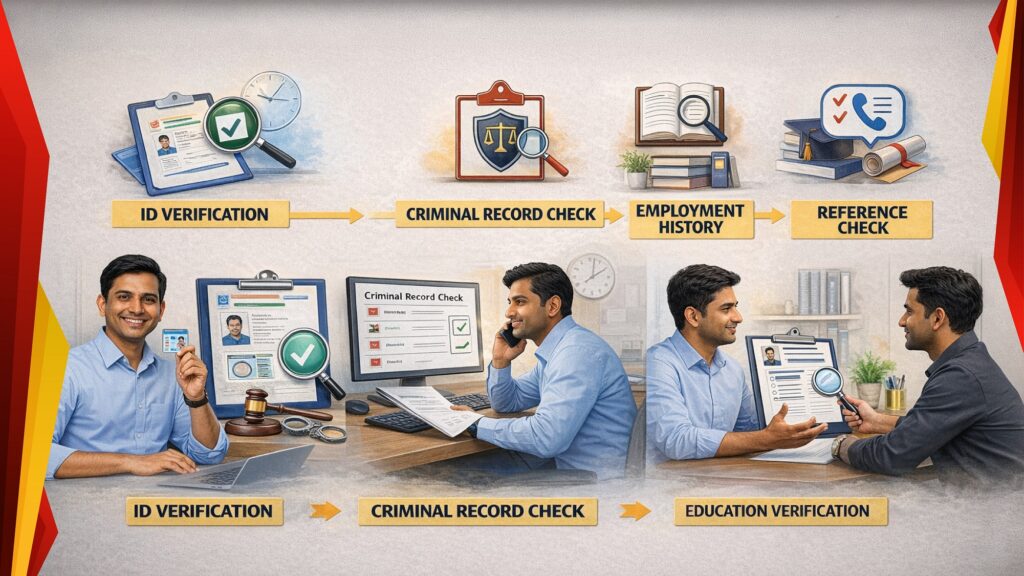
Criminal Record Check examines convictions, pending cases, and court records across jurisdictions. Employment History Verification validates previous job titles, tenure, responsibilities, and reasons for leaving. Education Verification confirms degrees, certifications, and institutional authenticity against claimed qualifications. Identity Verification cross-checks government-issued documents, PAN cards, and Aadhaar details ensuring candidate authenticity.
Additionally, criminal history checks uncover financial fraud records whilst employment verification details expose fabricated designations—collectively providing HR teams comprehensive candidate intelligence before finalising critical hiring decisions.
Understanding the Employee Background Check Process in India
The employee background check process India is a multi-layered journey to ensure HR compliance India. It begins with pre-employment checks in India, where Background Verification Services India validate a candidate’s identity and education.
A critical step is Police Verification, which involves checking local and national records to ensure no criminal history exists. This comprehensive employee background check process India safeguards the workplace by filtering out discrepancies before the final offer, keeping the organization legally and operationally secure.
Clean Background Check: What It Means for Employers
A clean background check means the candidate’s information matches official records with no major discrepancies. A clear verification report typically confirms education, employment history, identity, and indicates no criminal record found. For employers, successful employment screening supports a confident Hiring Decision while aligning with internal HR Policy and regulatory Compliance Check standards. It reduces onboarding risk, protects workplace safety, and improves trust in the recruitment process. However, employers should still assess skills, role fit, and cultural alignment, since a clean report verifies authenticity, not performance potential.
Background Check Red Flags: Common Issues Found in Reports
Background check red flags serve as critical indicators of potential risk, alerting employers to inconsistencies that could jeopardize workplace safety or legal standing. These reports often highlight Resume Fraud, such as discrepancies in employment history where dates or titles are inflated to hide gaps. Another severe Verification Alert is fake degree detection, which identifies unearned credentials.
Reports may also signal Identity Fraud through an address verification failure or a criminal record mismatch, where provided details don’t align with official databases. Recognizing these signs of Employment Discrepancy allows HR to address concerns before they become liabilities.
Criminal Record Check for Employment: What Employers Should Know
A criminal record check for employment is a fundamental safeguard within the Criminal Justice System (India) to ensure workplace integrity. This process involves a meticulous court record search across district and high courts to identify any past convictions or a pending criminal cases check.
To formalize this, employers often require a Police Clearance Certificate (PCC) or a direct police verification for job roles. This ensures the candidate has no adverse history recorded at local stations. By cross-referencing Court Records, organizations can mitigate risks and uphold high safety standards during onboarding.
Education Verification Report: Why Academic Checks Matter
An Education Verification Report is a cornerstone of Academic Verification, ensuring that a candidate’s expertise is genuine. With the rise of fake degree verification India, performing a university background check is essential to protect your company’s reputation.
- Degree Authentication: Validates the legitimacy of certificates through the University Grants Commission (UGC) or the National Academic Depository (NAD).
- Transcript Audit: Confirms graduation years and specific majors to align skills with job roles.
- Accreditation Check: Ensures the degree was issued by a recognized institution, preventing “diploma mill” fraud.
Employment History Verification: Validating Work Experience
Employment history verification remains among the most critical components of pre-employment screening, as studies indicate nearly 30% of candidates misrepresent work experience. The previous employer check validates job titles, employment duration, responsibilities, and departure reasons directly with former organisations.
Work experience validation through relieving letter verification confirms legitimate separation from previous employers, preventing dual employment fraud. The Human Resources Department cross-references Work Experience Certificates against official records whilst conducting thorough Employer Reference Checks that reveal performance patterns, behavioural concerns, and rehire eligibility—providing comprehensive candidate intelligence before finalising critical recruitment decisions.
Clean vs. Flagged Reports: Key Differences Explained
Understanding a background screening outcome is essential for effective Compliance Management. A clean vs flagged background check determines the next steps in your HR Audit and onboarding timeline.
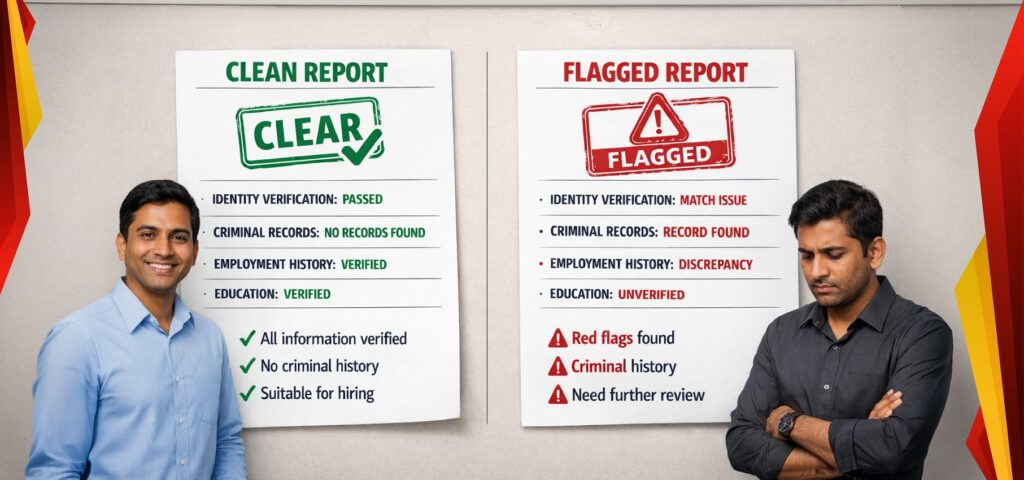
- Clean Report: Indicates a successful Risk Assessment where all data points identity, employment, and education align perfectly with the candidate’s claims.
- Flagged Report: A flagged verification report meaning points to specific hiring risk indicators, such as criminal records or significant employment gaps.
Distinguishing these allows HR to prioritize candidates who meet safety standards while investigating discrepancies that could compromise organizational integrity.
How Employers Should Respond to a Flagged Background Check
Discovering discrepancies requires structured response rather than immediate rejection. The HR investigation process begins with documenting specific flagged background check findings distinguishing between minor inconsistencies and serious misrepresentations before making employment decisions.
HR Compliance Policy mandates issuing a Show Cause Notice to candidates, providing reasonable opportunity to explain candidate discrepancy clarification with supporting documentation. Employment Law India requires fair hearing principles before adverse employment decision policy implementation.
HR must judge the seriousness of discrepancies and fake qualifications require stricter action than small timeline errors. Consulting legal counsel ensures HR Compliance Policy adherence throughout investigations. Maintaining detailed documentation of every decision protects organisations during potential disputes, demonstrating procedurally fair, legally compliant, and ethically sound recruitment practices throughout the entire HR investigation process.
FAQ
What does it mean if your background check is flagged?
A flagged background check indicates a background verification issue, BGV discrepancy, or employment screening alert in the verification report, requiring employer or HR department review.
What is the hardest background check to pass?
The hardest background check involves strict background screening, such as high‑level employment checks, government clearance verification, or security clearance, reviewing criminal records and financial history through government agencies.
What is ClearCheck background check?
ClearCheck verification is an employment screening service and BGV platform, providing candidate verification systems for employers, ensuring background verification service accuracy and compliance during hiring processes.
What are the different types of background checks?
Employment background checks include criminal verification, education verification, address verification, employment verification, and identity verification, ensuring employers receive a complete background report for candidate assessment.
What is the most common reason for failing a background check?
Background check failure reasons often involve BGV rejection causes such as employment verification discrepancies, false education records, or criminal history issues, flagged by verification agencies in background reports.