
What Is Background Verification ROI and Why HR Leaders Must Measure It
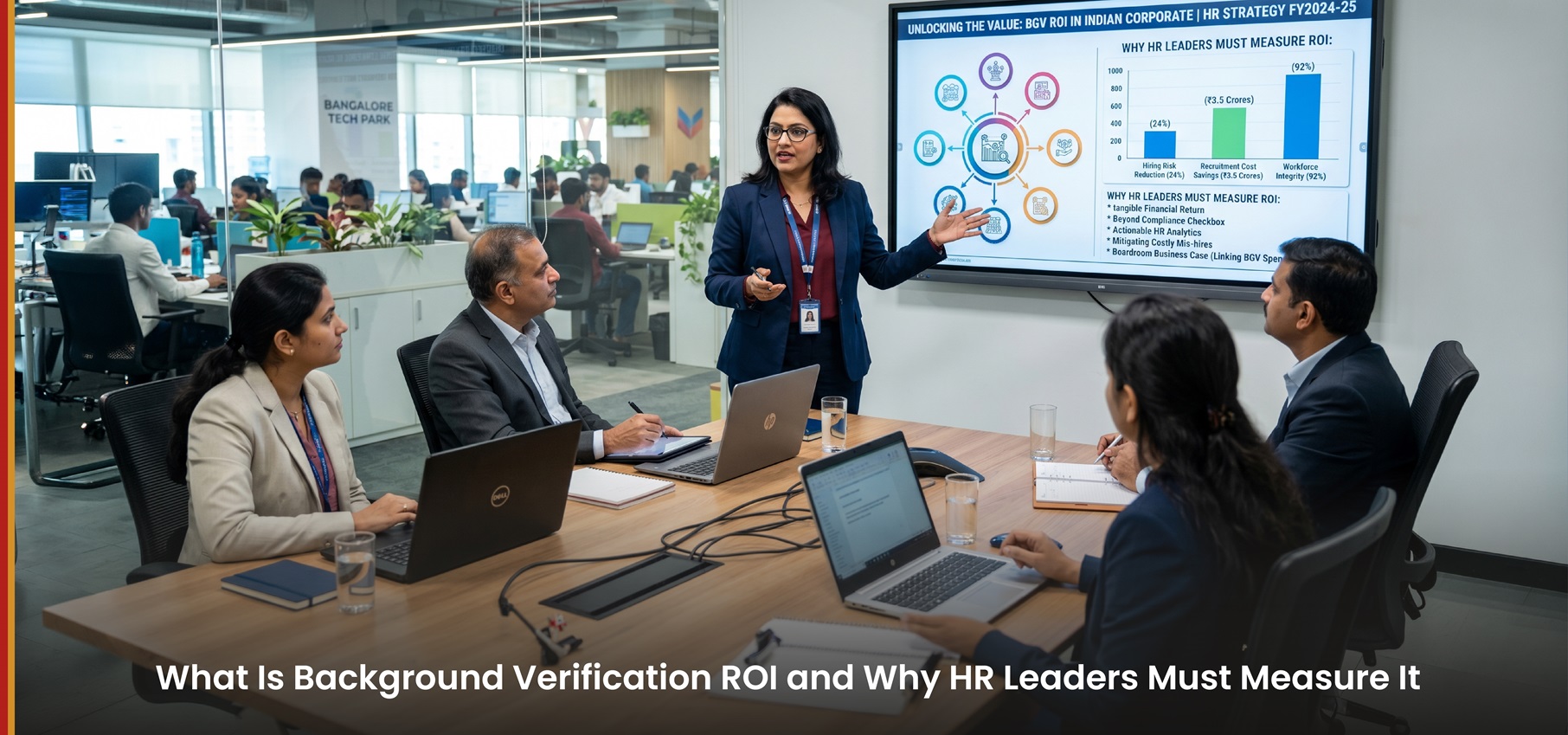
Background verification ROI measures the tangible financial return an organisation gains from systematic pre-employment screening weighed against what it costs to run. For HR leaders, this isn’t a compliance checkbox; it’s a hiring risk reduction lever with real rupee value. Every rupee invested in employee screening either prevents a costly mis-hire, protects workforce integrity, or surfaces a risk before it becomes a liability. Without HR analytics to quantify that return, leadership sees BGV as overhead. With it, HR makes a business case that speaks the language of the boardroom linking recruitment cost savings directly to smarter, data-backed workforce risk management.
Key Costs Involved in a Background Verification Program
A complete BGV cost analysis covers more than vendor fees. HR must account for:
- Verification process fees — per-check charges for criminal, education, and employment records
- Operational costs — internal HR hours spent coordinating, following up, and reviewing reports
- Compliance requirements — legal and documentation overhead tied to regulatory mandates
- Onboarding workflow delays — productivity loss when screening extends joining timelines
- Screening investment — technology platforms or third-party integrations that power the verification budget
Mapping every recruitment expenditure ensures the ROI calculation reflects reality.

How HR Can Calculate BGV ROI Using a Simple Formula
The standard ROI formula applies directly to BGV: (Total Savings − Total BGV Costs) ÷ Total BGV Costs × 100.
Savings include hiring cost avoidance from preventing bad hires, reduced attrition, and fraud losses averted. Feed these into a cost-benefit analysis alongside your verification savings, and the financial impact assessment becomes impossible to dismiss. This ROI measurement gives workforce planning conversations a concrete, performance metrics-backed foundation leadership can act on.
Metrics HR Teams Should Track to Measure Background Verification ROI
Effective ROI measurement metrics go beyond pass/fail rates. Track these employee verification KPIs:
- Discrepancy rate — percentage of screenings flagging false credentials
- Time-to-clear — screening performance indicators tied to onboarding speed
- Bad hire rate — core hiring quality metric pre and post-BGV
- Compliance monitoring score — regulatory adherence across verification cycles
- Cost-per-verified-hire — recruitment analytics that anchor talent acquisition metrics to actual spend
Data-driven hiring starts here.
Building a Business Case Leadership Will Approve for Background Verification Investment
Leadership doesn’t approve budgets on good intentions — they approve numbers. A strong verification business case must speak directly to the budget approval process: cost avoided, risk contained, compliance secured. Frame your business value proposition around the risk management framework executives already prioritise. With clear data, HR investment justification becomes compelling enough for executive approval and genuine leadership buy-in — positioning BGV as a strategic decision-making tool, not a recruitment overhead.

Best Practices to Maximize Background Verification ROI Across the Organization
Maximising BGV ROI demands screening optimization at every hiring stage. Standardise due diligence protocols across departments, integrate continuous monitoring beyond onboarding, and embed compliance enhancement into your recruitment governance framework. Align BGV touchpoints with the full employee lifecycle management process — not just pre-joining. Hiring process improvement also means periodic audits that identify gaps before they become liabilities. Together, these verification best practices drive operational efficiency while strengthening organisation-wide workforce protection systematically.
FAQs
What is background verification ROI and how is it calculated?
Simply put, background verification ROI tells you how much value your screening investment return generates compared to what you spend using a straightforward cost-benefit analysis formula that quantifies risk reduction and real hiring efficiency gains.
Why should HR teams measure the ROI of background verification programs?
Measuring ROI helps HR teams prove — in numbers leadership understands — that verification benefits go beyond compliance, directly linking hiring risk reduction and recruitment savings to stronger workforce integrity and operational performance.
What factors should be included in a BGV ROI calculation?
Include verification costs, hiring losses, onboarding costs, recruitment expenses, and fraud prevention savings. These ROI metrics enable a complete financial impact assessment using reliable performance indicators.
How can HR build a business case that leadership will approve for background verification?
Anchor HR justification in data connecting verification investment to corporate governance, risk management framework priorities, strategic planning outcomes, and clear stakeholder engagement for executive approval.
What are the most important metrics for measuring background verification ROI?
Key hiring KPIs include discrepancy rates, time-to-clear, cost-per-hire, and compliance reporting scores all feeding into workforce risk assessment through structured data analytics and screening analytics tracking.