
Myth: Small & Medium Enterprises (SMEs) Don’t Need Comprehensive Background Checks. Reality: SMEs/ MSMEs Feel the Impact More.
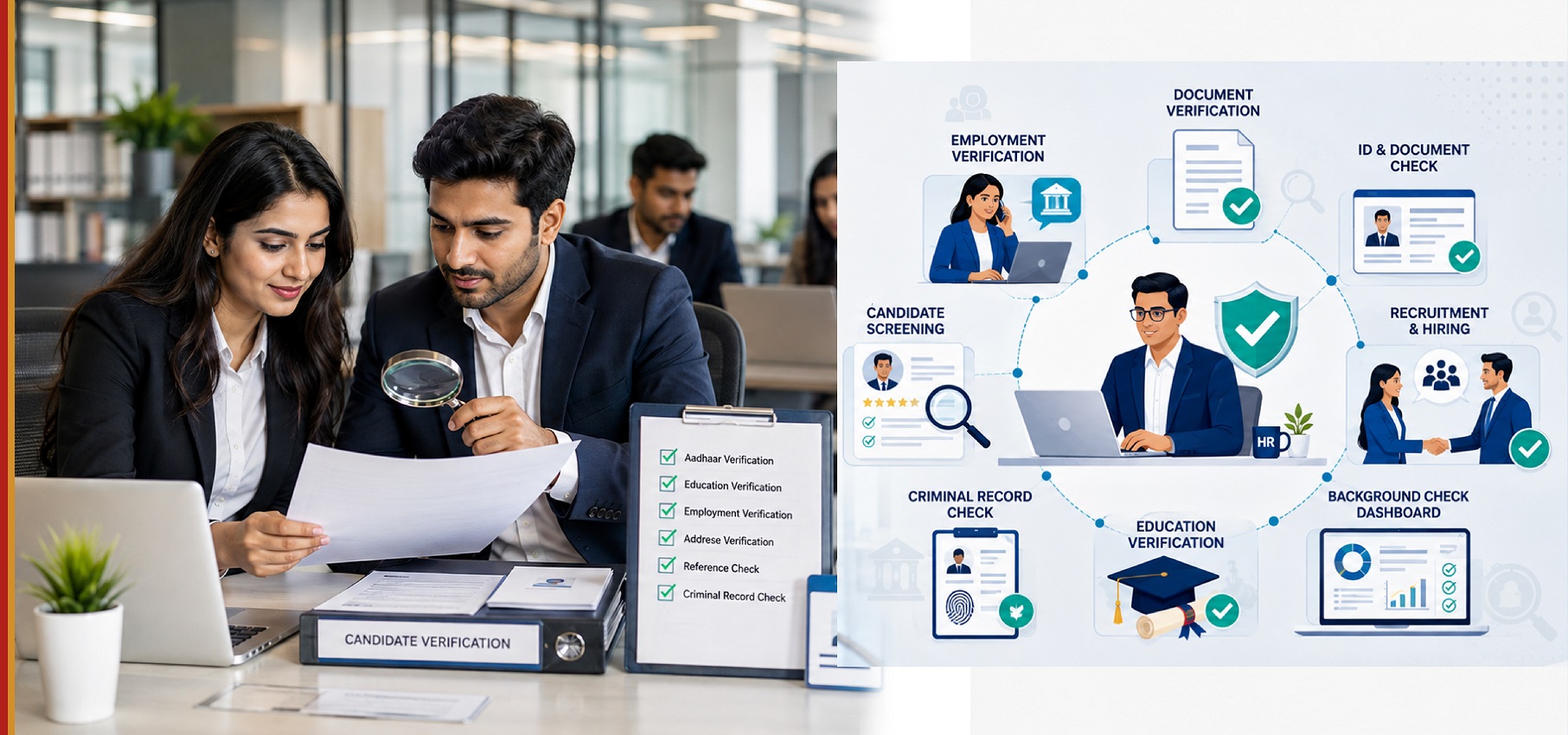
A bad hire in a 500-person company is a setback. In a 20-person team, it can be a crisis. Small businesses operate with tighter margins, leaner teams, and less room for error — making pre-employment screening and due diligence not a luxury but a necessity. Small business background checks and structured employee screening services are what separate organisations that grow confidently from those that absorb recruitment risk silently. Workforce risk management and organizational resilience begin at the first hire — not the fiftieth.
Why Small & Medium Enterprises (SMEs) Face Greater Hiring Risks Than Large Enterprises
A common misconception is that small and medium enterprises (SMEs/MSMEs) do not require comprehensive background checks. In reality, SMEs often face greater hiring risks than large enterprises. In a small team, every hire carries disproportionate weight. One case of employee fraud, an inflated resume, or a hidden termination can disrupt business continuity, damage client relationships, reduce workforce integrity, and affect overall organizational performance. Unlike large enterprises that can absorb hiring mistakes across multiple departments, SME recruitment and startup hiring have no such buffer. This is why comprehensive employee background verification is not just a compliance measure for SMEs—it is a critical investment in business risk reduction, employee retention, and sustainable growth.
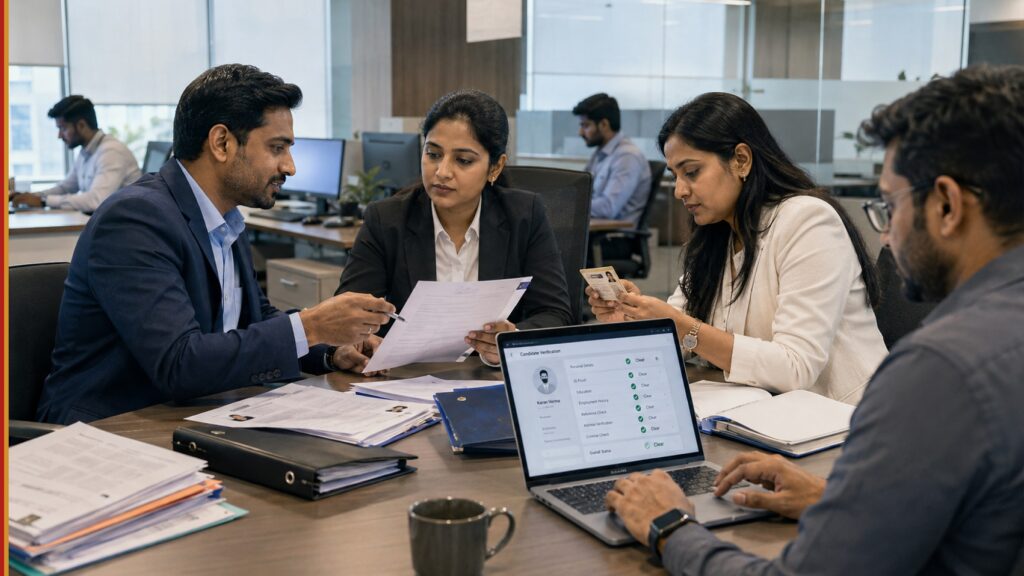
How Employment Verification Protects Small & Medium Enterprises (SMEs) from Costly Hiring Decisions
Every unverified claim in a small business hire becomes a liability that the organisation must bear alone. Employment verification confirms actual job titles, tenure, and reasons for leaving—replacing assumptions with verified facts. A structured verification workflow covering employment history validation, credential verification, document authentication, and identity verification ensures every candidate verification is evidence-based. When completed before onboarding, employee verification eliminates the downstream cost of discovering discrepancies after an employee has already gained access to clients, finances, and sensitive business information.
What Should Small & Medium Enterprises (SMEs) Background Checks Include?
Small business background checks do not need to be complex, but they must be comprehensive. At a minimum, every screening should include identity verification, address verification, education verification to confirm academic credentials, employment history verification, and criminal record screening for roles involving financial responsibilities or client access. Businesses should also conduct reference verification to validate a candidate’s conduct, performance, and reasons for leaving previous employers. Together, these checks help SMEs make informed hiring decisions while reducing recruitment risk.
How Employee Screening Services Help Startups and SMEs Hire with Confidence
Employee screening services give startups and SMEs the same hiring rigour that large enterprises typically have in place—without requiring extensive internal HR infrastructure. Structured pre-employment background verification aligned with a defined compliance framework ensures every candidate undergoes a thorough risk assessment before the onboarding process begins. Workforce verification throughout the recruitment lifecycle minimises post-hire surprises, strengthens client trust, improves workforce quality, and helps growing businesses build strong HR governance as they scale.
Common Myths About Background Checks That Can Hurt Small & Medium Enterprises (SMEs)
These hiring myths cost small businesses more than they realise:
- “We trust our referrals” — Personal referrals bypass candidate due diligence and miss critical recruitment risk that pre-employment screening would catch
- “We can’t afford background checks” — The cost of employee verification is a fraction of one bad hire’s fraud prevention failure
- “Small teams don’t need formal checks” — Informal hiring creates compliance management gaps that grow as the business scales
- “We’ll verify after joining” — Delayed risk assessment means unverified employees already have access before informed hiring decisions are made
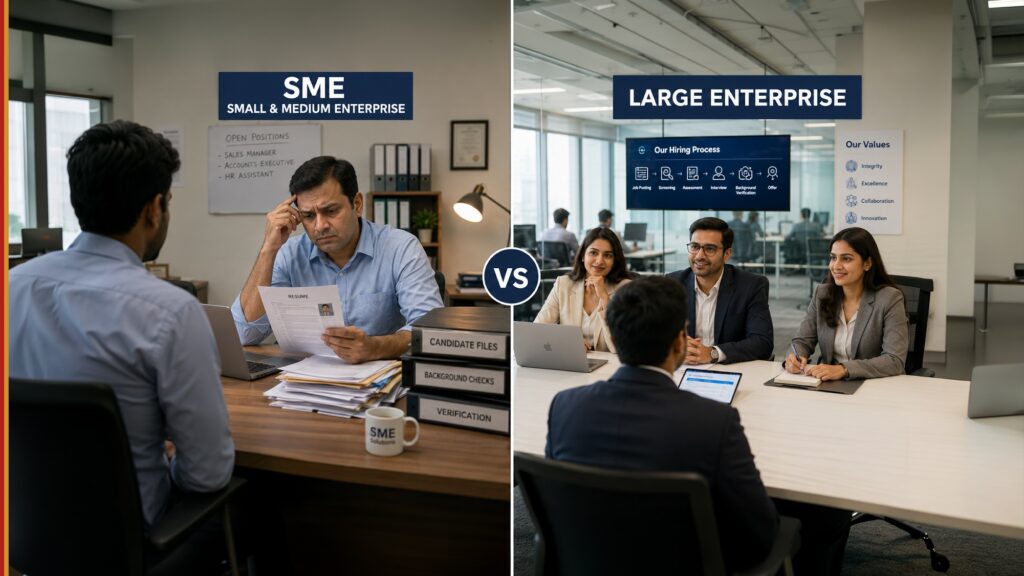
Best Practices for Hiring Safely in Small & Medium Enterprises (SMEs)
Hiring for small businesses safely requires structure—not size. Here is what works:
- Standardised hiring process — Define a consistent background screening checklist for every role before recruitment begins.
- Consent management — Obtain documented candidate consent before starting any employee verification.
- Role-specific checks — Match background checks to the role’s risk level, with deeper checks for financial and client-facing positions.
- Compliance documentation — Maintain records of every check to support your hiring policy and workforce quality during audits.
- Verification turnaround time — Complete all background checks before joining, not after.
Why Comprehensive Background Checks Are a Smart Investment for Growing Businesses
Comprehensive background checks are not an overhead—they are a strategic investment in sustainable business growth. Every verified hire strengthens workforce quality, reduces hiring risk, and protects client trust. For SMEs and growing businesses, where every employee has a direct impact on operations, one prevented bad hire can save significantly more than the cost of verification. Structured employee screening enables organisations to scale confidently while safeguarding business continuity, compliance, and long-term organisational performance.
FAQs
Q1. Do small businesses really need background checks before hiring employees?
Yes. Small business background checks and pre-employment screening help protect workforce integrity, reduce recruitment risk, and support informed hiring decisions before every employee joins the organisation.
Q2. What does a comprehensive employment verification process include?
A comprehensive employment verification process includes employment history verification, education verification, identity verification, document authentication, reference verification, and other background checks that validate a candidate’s credentials before onboarding.
Q3. Are employee screening services affordable for startups and SMEs?
Yes. Employee screening services are designed to be cost-effective for startups and SMEs. Investing in structured background verification helps reduce hiring risks, improve recruitment efficiency, and prevent costly hiring mistakes.
Q4. How can background checks help small businesses avoid hiring mistakes?
Background checks verify candidate information, identify discrepancies, reduce fraud risks, and support informed hiring decisions through a structured due diligence and compliance process.
Q5. Which background checks should every small business perform before onboarding?
Every small business should conduct identity verification, employment history verification, education verification, address verification, reference verification, and criminal record screening (where relevant) before onboarding a new employee.