
Hiring on a Timeline: How Long Should Each BGV Step Actually Take?
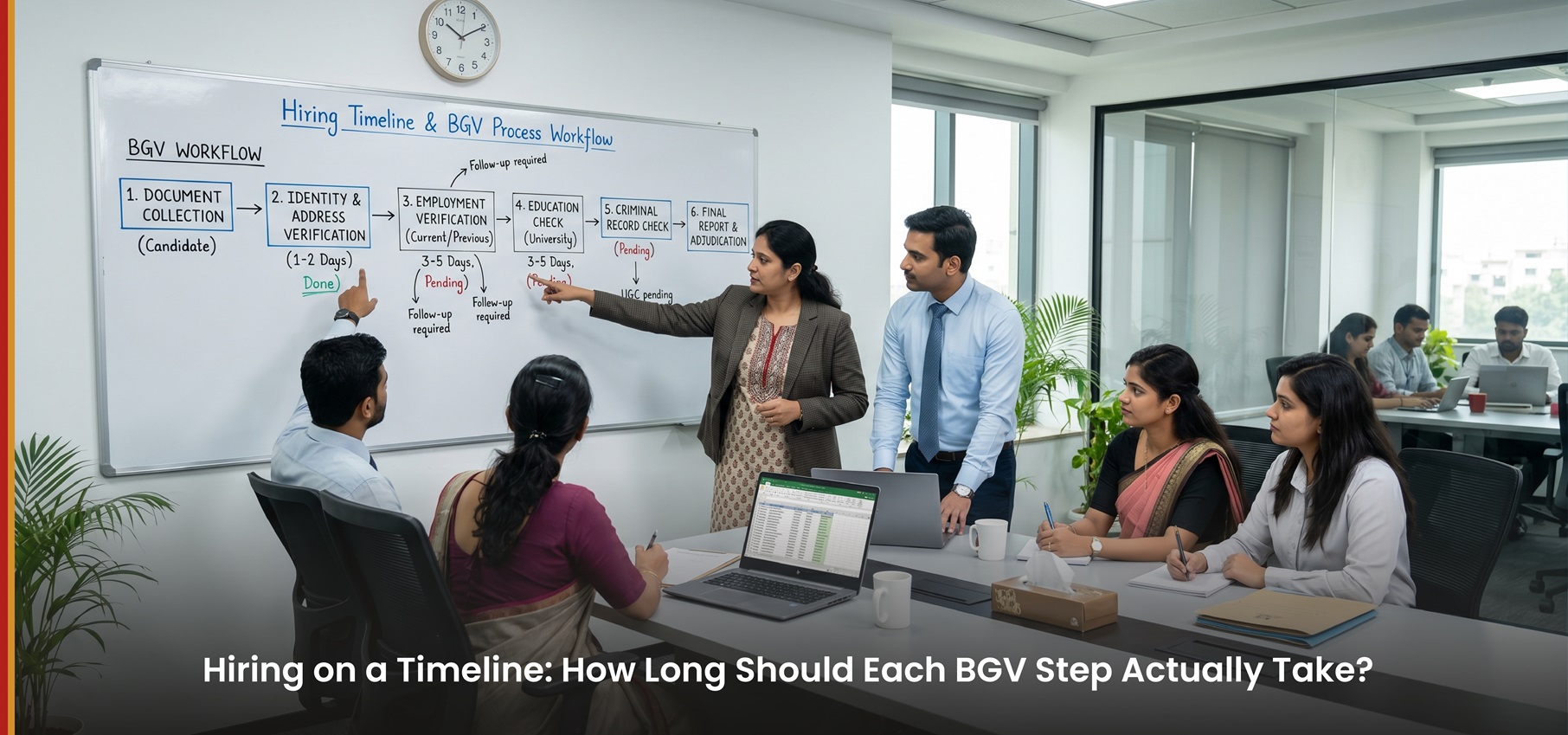
A structured BGV process rarely fails on intent — it fails on time. When the background verification process stretches beyond reasonable limits, it disrupts the hiring timeline, delays candidate onboarding, and frustrates both HR teams and prospective employees. Each stage of the screening lifecycle from document collection to report delivery should follow a defined verification workflow. Pre-employment screening for identity and address typically wraps up in one to two days; employment and education checks take three to five. Efficient workforce validation and streamlined hiring operations depend on treating the employee verification timeline not as an afterthought, but as a hiring priority.
Understanding the Complete Background Verification Process from Start to Finish
Every background check begins with consent and ends with a verified report — but the stages in between define hiring quality. A structured BGV process steps framework covers identity submission, document authentication, identity validation, and reference outreach. Each phase of the employee screening process feeds into a broader verification framework that ensures compliance workflow standards are met. Skipping any of the verification stages compromises the integrity of pre-employment checks and exposes organisations to avoidable employment screening risks.

How Long Does Employment Verification Typically Take?
Employment verification timeline varies by employer responsiveness. Standard work history verification cross-checking employment records, HR documentation, and candidate credentials takes two to five business days. Complex cases with multiple roles may extend the background check duration. For a fast background check, digitised reference validation and proactive candidate cooperation make the difference. Streamlined employment screening and a reliable verification turnaround keep hiring on schedule.
Education Verification Timelines and Common Causes of Delays
The education verification process typically takes three to seven business days. Academic verification involves requesting academic records, confirming degrees through institutional validation, and completing qualification assessment via document review. However, verification delays are common, unresponsive institutions, incomplete submissions, or discrepancies in candidate screening data slow the background verification process and credential verification considerably, pushing timelines beyond expectations.
Identity and Address Verification: Expected Turnaround Times for HR Teams
Identity verification and the address verification process are among the fastest stages in any background check timeline. Identity authentication and residence validation using digital records typically complete within one to two business days. For thorough employee verification, physical address checks may take longer. HR teams prioritising fast screening should ensure applicant verification documents are submitted upfront, keeping compliance screening efficient and on track.
Criminal Record Checks and Court Verification: How Long Should They Take?
A criminal background check is among the most time-sensitive stages in any background check process. Court record verification involves accessing legal records through public record search and conducting thorough compliance review. Standard pre-employment verification for criminal history takes three to seven days. Jurisdictional complexity and due diligence requirements can extend the screening timeline, making early initiation and systematic risk assessment essential for HR teams.

What Factors Influence How Long Background Checks Take for Pre-Employment?
Understanding how long background checks take for pre-employment depends on several variables. Background check duration and verification turnaround time are shaped by data availability, record accessibility, and verification complexity. Regulatory requirements add procedural layers, while poor candidate responsiveness remains a leading cause of BGV delays across the screening process.
How Fast Background Check Solutions Are Redefining Hiring Timelines
A fast background check is no longer a luxury — it’s a hiring expectation. Workflow automation and real-time validation have made instant verification achievable across most screening stages. Organisations embracing process optimization report significantly accelerated hiring with fewer drop-offs. A quick BGV process powered by workflow automation and workforce intelligence compresses multi-day timelines into hours, giving HR teams a measurable competitive advantage in talent acquisition
FAQs
How long does it take to do a background check for employment in India?
How long it takes to do a background check varies by scope. A standard background verification process covering pre-employment checks completes in five to ten business days, depending on the verification workflow and employment validation complexity.
Which step in the BGV process usually takes the longest?
Education checks dominate verification delays within the BGV process. Institutional validation and credential verification depend heavily on university responsiveness, making education verification duration and record retrieval the most time-consuming stages in the employment verification timeline.
Can a fast background check still be accurate and compliant?
Yes. A fast background check backed by a strong compliance framework maintains verification accuracy. Automated audit trail systems and built-in quality assurance protocols ensure compliant screening without compromising the background verification process.
What factors can delay a background verification process?
Common background check delays include data inconsistencies, limited record availability, and incomplete documentation review. Verification dependencies across multiple institutions compound BGV turnaround time and strain the overall employee screening process.
How can HR teams reduce background check turnaround times?
Workflow automation, digital onboarding, and verification integration accelerate the faster BGV process. Standardising documentation through process standardization enables quick background verification, improving hiring efficiency and overall employee screening optimization.