
Granting Full System Access Before BGV Clearance: A Major Onboarding Risk for Companies
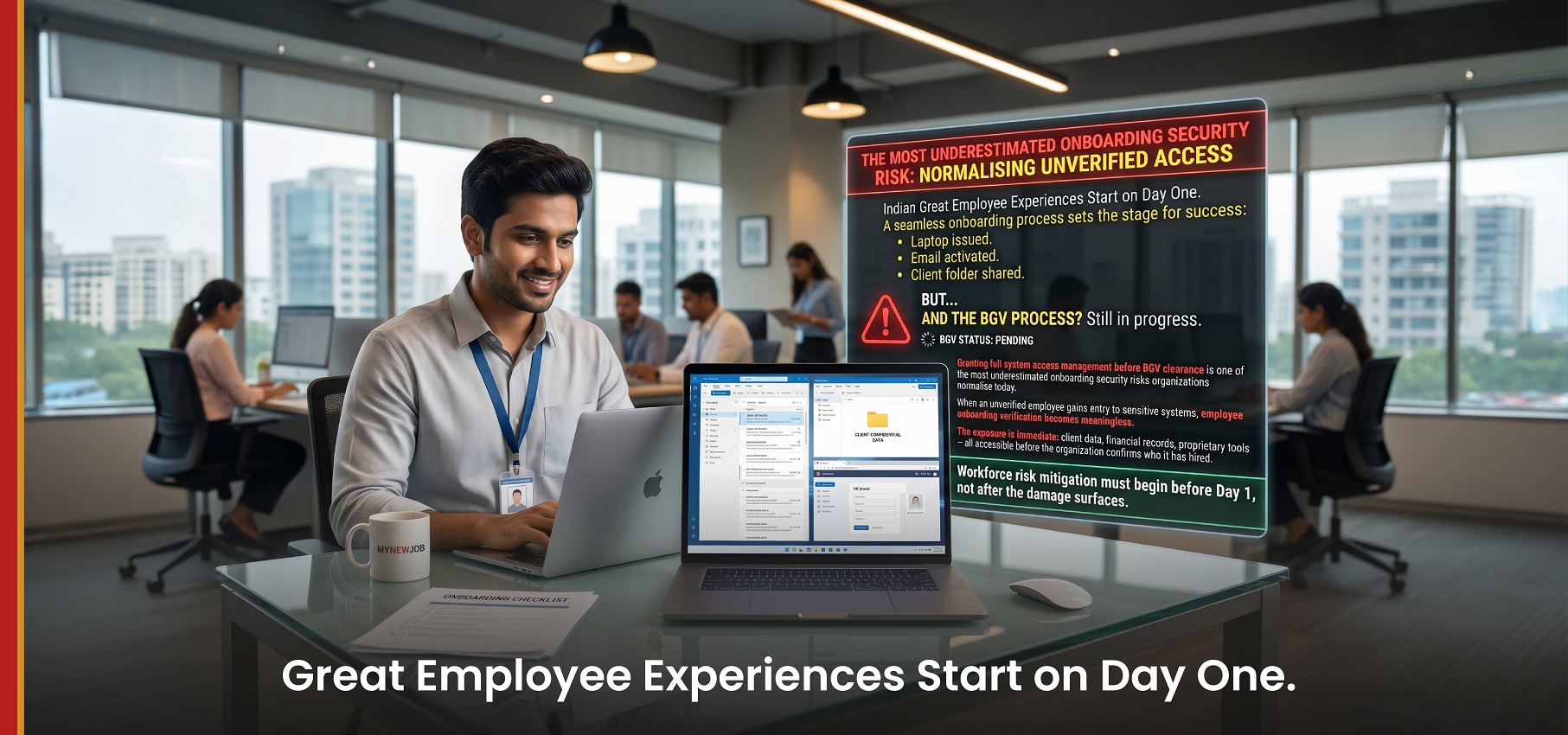
The laptop is issued. The email is activated. The client folder is shared. And the BGV process? Still in progress. Granting full system access management before BGV clearance is one of the most underestimated onboarding security risks organizations normalise today. When an unverified employee gains entry to sensitive systems, employee onboarding verification becomes meaningless. The exposure is immediate client data, financial records, proprietary tools — all accessible before the organization confirms who it has hired. Workforce risk mitigation must begin before Day 1, not after the damage surfaces.
Why Background Verification Must Be Completed Before Employee System Access
Background verification is not a post-joining formality. It is a pre-access requirement. Allowing employee access control before BGV clearance process completion creates a window of unresolved risk that auditors, clients, and regulators are increasingly scrutinising. A structured secure onboarding framework ensures that pre-employment screening drives access decisions, not joining dates. Zero trust security principles demand that no individual be trusted by default, regardless of role. Role-based access tied to verification status, governed by compliance governance and digital identity validation, ensures workforce integrity is protected from the moment an employee enters the organization’s systems.

Understanding the BGV Process and Its Role in Secure Employee Onboarding
A robust BGV verification framework is what separates responsible onboarding from a governance gap. Here is what every HR leader must understand:
- BGV verification validates every candidate claim before onboarding decisions are finalised.
- A structured employee verification workflow eliminates gaps that create compliance exposure during the onboarding process.
- Pre-hire verification covers employment verification, criminal background screening, address authentication, education verification, and compliance checks — each a distinct risk control.
- Treating candidate screening as a prerequisite to access, not a parallel workstream, builds stronger hiring governance.
Best Practices for Managing Onboarding During Pending BGV Verification
Onboarding best practices demand that access follows verification not joining dates. A conditional onboarding framework with defined employee access restrictions creates a secure hiring process built on evidence, not assumption. Onboarding workflows must be structured around phased access management, supported by HR compliance procedures and temporary access controls. Digital onboarding systems that track the verification lifecycle in real time allow HR to manage pending cases without halting business operations ensuring onboarding moves forward without outpacing the controls that protect the organization.
How HR Teams Can Balance Faster Onboarding With BGV Compliance
Speed and recruitment compliance are not opposites — they require alignment. Reducing BGV turnaround time without compromising recruitment compliance starts with prioritising checks by role sensitivity. A structured fast onboarding process built around defined employee verification timelines ensures onboarding efficiency without creating access gaps. Workflow automation supports onboarding optimization by tracking pending cases in real time. A strong compliance strategy backed by candidate risk profiling and HR governance allows organizations to onboard confidently — without outpacing the verification process.
The most effective HR teams achieve this through three disciplined controls — Conditional Joining allows basic induction once identity clears, restricting system access until full BGV turnaround time is met. Integrating workflow automation into your HRMS ensures real-time onboarding optimization, candidate risk profiling, and a structured compliance strategy that keeps every hiring decision audit-ready.
Industry Sectors Where BGV Clearance Before System Access Is Critical
Every role isn’t high risk, but some mistakes are high cost. BGV for IT companies managing proprietary code and client data, banking employee verification governed by RBI compliance mandates, and onboarding compliance India frameworks across regulated sectors demand strict pre-access clearance. Workforce verification standards in healthcare, BFSI, and enterprise technology are non-negotiable. Financial compliance, cybersecurity governance, sensitive data protection, regulated workforce management, and enterprise security operations all depend on verification being completed — not assumed — before system access is granted.

Building a Secure Onboarding Policy Around Employee Background Verification
A strong onboarding policy framework does not begin on joining day; it begins at the offer stage. Embedding employee background checks and BGV clearance policy into a defined compliance management framework ensures hiring risk reduction at every stage. Secure workforce onboarding requires organizational security policy, employee lifecycle management, access governance, and verification protocols that treat background clearance as a prerequisite not a parallel process.
FAQs
What is BGV clearance in employee onboarding?
BGV clearance confirms that the employee verification process is complete, covering identity verification, employment authentication, and compliance procedures before full onboarding compliance and system access are granted to any new hire.
Why should companies avoid granting full system access before BGV verification?
Granting access before employee verification creates system access risks, including insider threat management failures. Onboarding security depends on access governance and compliance monitoring to prevent hiring fraud prevention gaps that surface only after damage occurs.
How long does the BGV process usually take during onboarding?
The BGV process timeline varies by role and sector. Standard pre-employment checks with document validation take 7–15 days. Structured verification workflow and compliance tracking across the onboarding lifecycle can significantly reduce onboarding verification duration.
What are the risks of incomplete background verification during onboarding?
Incomplete BGV risks include employee fraud risks, onboarding compliance issues, and organizational risk assessment failures. Without criminal record verification, workforce integrity and operational security remain exposed making unsafe hiring practices a direct business liability.
What are the best onboarding practices while BGV verification is pending?
Apply temporary access management and restricted access protocols until checks are clear. A secure onboarding workflow with pending BGV onboarding controls, HR risk management, and a digital onboarding framework ensures verification governance without disrupting business operations.