
How Background Check Questionnaires Reveal the Real Candidate

Hiring without verification is like signing a contract blindfolded screening removes uncertainty and protects the workplace. Every reliable hiring process begins with a structured background check questionnaire format that captures accurate candidate information before finalising recruitment decisions. When human resources (HR) teams implement a standardised employee screening form, they systematically collect employment history, educational qualifications, criminal records, and professional references in one comprehensive document.
This pre-employment background screening approach feeds directly into the candidate verification form process, where submitted information is cross-checked against official records. Following employment screening questionnaire India compliance standards, organisations strengthen their hiring due diligence process considerably.
Ultimately, consistent pre-employment screening through thorough background check and employee verification procedures reduces fraudulent applications, minimises workplace risks, and ensures every new hire meets organisational standards with complete transparency and confidence.
What Is a Background Check Questionnaire?
A background check questionnaire is a vital piece of HR Documentation used to bridge the gap between a resume and reality. Often integrated with an Employment Application Form, this background verification questionnaire collects specific data points like past supervisors and criminal history to ensure workplace safety and integrity.
The process culminates in a candidate declaration form, where the applicant legally attests to the accuracy of their claims. This Candidate Declaration acts as a safeguard against fraud. For businesses, using a robust background check form for employees prevents “bad hires” by verifying the professional trail. Below is a simplified employment screening questionnaire sample flow:
- Identity: Legal name and SSN.
- History: 7-year employment/education audit.
- Consent: Signed authorization for third-party vetting.
In a world where professional reputations are paramount, these questionnaires serve as an essential step in safeguarding both parties and promoting accountability.
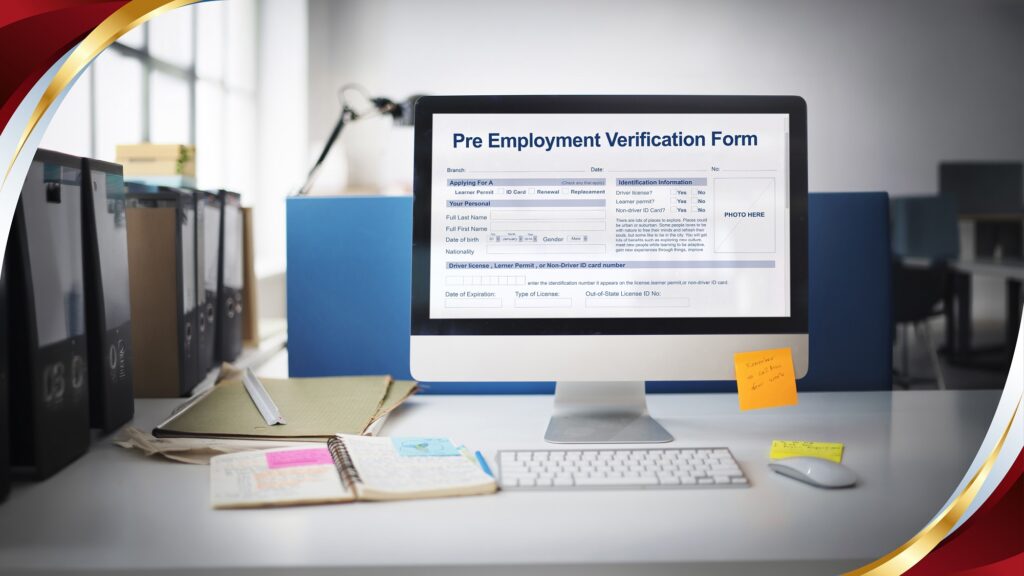
Key Details Included in a Pre Employment Verification Form
A comprehensive pre employment verification form serves as a roadmap for Identity Verification, ensuring the candidate is who they claim to be. To build a secure profile, the pre employment verification form details must prioritize identity verification information, such as legal names and SSNs, alongside a rigorous address history check spanning several years.
Beyond identity, the education and employment details form captures essential data for Employment History Verification and Education Verification. These sections require precise dates and contact info. Finally, a Criminal Record Check section provides legal clarity, ensuring total transparency before a final hiring decision is made.
Role of Employee Screening Questionnaire in Pre Employment Background Screening
The employee screening questionnaire purpose extends far beyond data collection; it is the cornerstone of a secure pre-hire verification process. By acting as a comprehensive background screening checklist, this document allows firms to perform a deep Risk Assessment before onboarding.
Integrating these forms into your Employment Screening Policy ensures strict HR Compliance and shields the company from negligent hiring. This structured Risk Assessment in hiring identifies discrepancies early, filtering out candidates who provide misleading information. Ultimately, the questionnaire transforms raw applicant data into a verified profile, ensuring every new hire aligns with company safety standards.
Why Companies in India Rely on Structured Background Check Questionnaires
Every reliable hiring process begins with a structured background check questionnaire format that captures accurate candidate information before finalising recruitment decisions. When human resources (HR) teams implement a standardised employee screening form, they systematically collect employment history, educational qualifications, criminal records, and professional references in one comprehensive document.
This pre-employment background screening approach feeds directly into the candidate verification form process, where submitted information is cross-checked against official records. Following employment screening questionnaire India compliance standards, organisations strengthen their hiring due diligence process considerably.
Ultimately, consistent pre-employment screening through thorough background check and employee verification procedures reduces fraudulent applications, minimises workplace risks, and ensures every new hire meets organisational standards with complete transparency and confidence.
Legal and Compliance Aspects of the Background Check Process in India
Adhering to background check compliance in India is no longer optional; it is a rigorous mandate under Employment Law (India). Central to this is the Information Technology Act 2000 (India), which governs the handling of sensitive digital data. However, the landscape has shifted with the Digital Personal Data Protection Act 2023 (India), making Data Privacy Compliance paramount.
Employers must now ensure employee data protection in India by obtaining explicit consent for background verification. This involves a clear notice detailing the data collected and its purpose. To meet HR legal requirements in India, companies must also implement data minimization collecting only what is strictly necessary for the role. In practice, compliant hiring now means verify with permission, and verify with purpose.
How to Design an Effective Employee Screening Questionnaire
Creating a structured hiring form requires a strategic balance between HR Policy and the candidate experience. To build a robust employee screening questionnaire template, follow this pre hire verification process flow:
- Define Scope: Align the form with your Employment Screening Policy to identify specific Risk Assessment needs.
- Ensure Compliance: Embed background check questionnaire best practices by including a clear Candidate Declaration and consent clause.
- Draft Questions: Use a candidate verification checklist covering identity verification information and Education Verification.
- Audit for Data Minimization: Keep only what is strictly necessary to maintain a solid Compliance Framework.
- Final Integration: Insert the questionnaire into your digital Recruitment Process for seamless data flow.
Benefits of using a Standardized Pre Employment Verification Form
A standardised background verification form ensures every candidate undergoes identical screening, eliminating inconsistencies that create Hiring Risk Management vulnerabilities. Research indicates approximately 40% of candidates misrepresent information on applications making structured HR documentation essential for detecting discrepancies in job titles, employment dates, and qualifications.
Human Resource Management teams benefit from auditable records that strengthen Corporate Compliance during regulatory inspections. Standardised forms systematically validate employment history spanning seven to ten years, covering criminal records, educational credentials, and reference details. A consistent hiring process reduces unconscious bias whilst improving decision-making accuracy.
Organisations implementing uniform verification frameworks report significantly fewer post-hire disputes, reduced turnover, and stronger workforce quality demonstrating that systematic Corporate Compliance documentation during recruitment effectively protects organisational reputation, minimises negligent hiring liability, and builds long-term operational trust.
FAQ
What can be revealed in a background check?
Employment screening details may include BGV information such as criminal verification, job history check, education verification, and identity records, helping employers assess candidate reliability and suitability.
How do I know if my BGV is successful?
A successful BGV status update comes from the HR department or verification agency, confirming background verification results, employment screening approval, and candidate eligibility for final hiring decisions.
What is a red flag in a background check?
Background check red flags include BGV discrepancies, false employment history, criminal record issues, or missing education details, raising employment screening issues for employers, verification agencies, and candidates.
What type of background check do most employers use?
Most employers use a standard employment background check, including pre‑employment screening with criminal and education verification, conducted by HR departments and verification agencies to ensure candidate authenticity.
What all things are checked in background verification?
BGV components include employee verification checks such as identity and criminal verification, employment verification, education verification, address verification, ensuring comprehensive screening for candidates before final hiring decisions.